
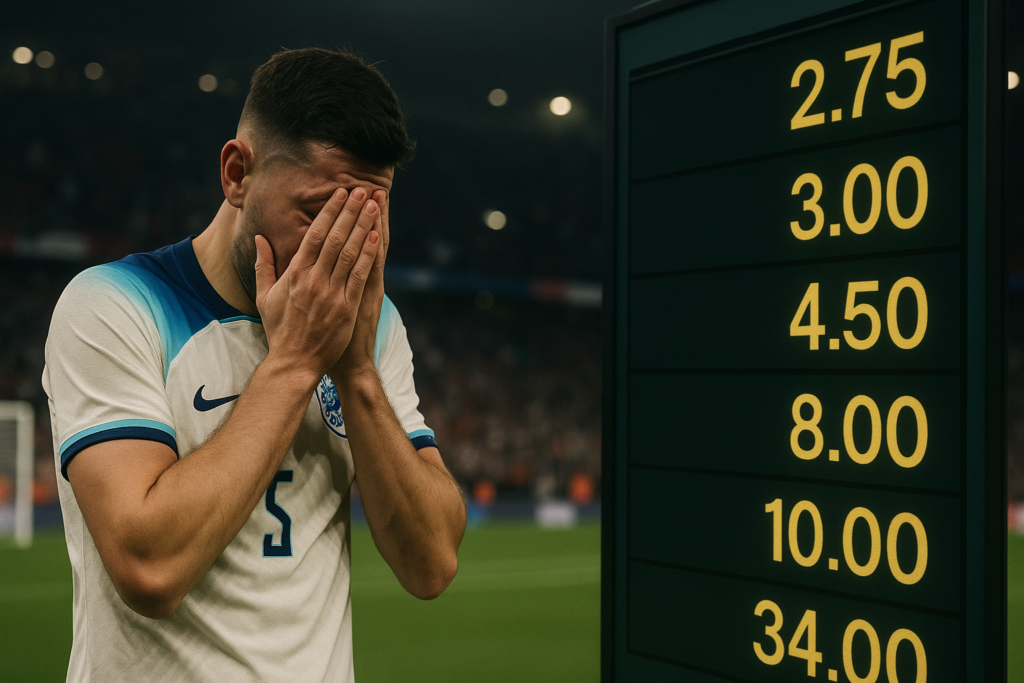
England’s 2026 World Cup Exit: What it Means for Punters, Posters and the Next Big Markets
England bowed out of the 2026 World Cup at the semifinal stage, beaten by Argentina after taking the lead — a result that felt painfully familiar to many fans and bettors. Anthony Gordon had given England the advantage, only for Enzo Fernández to level in the 85th minute and Lautaro Martínez to head Argentina into the final. For gamblers, traders and anyone who prices risk on international tournaments, that late swing isn’t just heartbreak — it’s useful data.
Let’s unpack the game, trace England’s route to the last four, and translate the key themes into actionable betting insight: where the market mispriced risk, which lines you can exploit next time, and what to watch when England play in high-leverage knockout situations.
How England’s 2026 Campaign Played Out (the short version)
England reached the semifinal of the 2026 World Cup before being eliminated by Argentina, who moved on to a second consecutive final after the late turnaround. That result continued a long drought: England have now gone 14 consecutive World Cup tournaments without lifting the trophy, a run that stretches back to 1966.
On the road to the semis England showed resilience — and some worrying volatility. Their group-stage form was solid: they topped Group L with 7 points from three games, finishing ahead of Croatia, Ghana and Panama. In the knockouts they edged DR Congo 2–1 in Atlanta after coming from behind (Harry Kane’s late brace), beat Mexico 3–2 in a thriller in the round of 16, and overcame Norway 2–1 after extra time in the quarterfinals. Then came Argentina, and the familiar late collapse.
For match recaps and the official elimination tracking, see the ESPN summary of the semifinal and the broader elimination lists on Fox Sports.
ESPN: World Cup 2026 elimination recap (including England v Argentina)
Match anatomy: England vs Argentina — what happened, minute by minute (and why it matters to bettors)
The narrative is straightforward but rich in betting lessons. England took the lead through Anthony Gordon, and for large chunks of the second half they looked likely to close the job. Then, in quick succession late on, Enzo Fernández scored an 85th-minute equaliser and Lautaro Martínez headed the winner. Argentina’s comeback illustrates two things bettors care about: late-game variance and opponent clutch performance.
- Late goals move markets fast. An 85th-minute equaliser often reprices live markets dramatically — from match-winner odds to totals and both-teams-to-score lines.
- In-play volatility wins and loses money. Traders who were short on an England win had to adjust rapidly; backers who parked money on England before full-time saw a damaging swing in expectation and P&L.
- Context changes perception. For public bettors who had sentimental money on England to finally “get over the line,” the late collapse reinforces scepticism and will likely affect futures and ante-post markets for some time.
For a detailed match recap that highlights the late goals and game context, consult ESPN’s write-up of the elimination.
ESPN match recap and assessment
Route to the semis: resilience or smoke-and-mirrors?
England’s path to the last four combined solid group-stage work with a handful of nervous moments that repeatedly required late-game heroics. That mix is useful for market analysis because it tells you something about underlying strength versus match luck.
- Group stage consistency: Topping Group L with 7 points is a tidy, if unspectacular, foundation. They finished ahead of Croatia, Ghana and Panama, which meant a favourable knockout draw on paper. The BBC’s group round coverage gives match details and confirms the points tally.
- Last-minute saves and extra time: England came from behind to beat DR Congo 2–1 in the round of 32 — with Harry Kane delivering a late brace to turn the tide. That match showed both killer instinct and vulnerability.
- Thrill in the round of 16: England defeated Mexico 3–2 in a back-and-forth tie, a result that suggests offensive firepower but defensive soft spots. Sporting News’ tournament elimination list references that result in context.
- Quarterfinal endurance: The win over Norway (2–1 after extra time) shows stamina and the ability to grind one out, but also a tendency to require extra time against teams outside the traditional elite.
These moments — comeback wins, extra time, last-gasp swings — create a particular betting profile: England are a team that can win tight knockout matches, but they also present risk of late reversals. Industry trackers at outlets such as BBC Sport and Sporting News document these fixtures and outcomes.
What this means for futures and in-play markets
Now for the part most readers will care about: the money bit. England’s elimination affects three main market types — futures, handicaps and live markets — in clear ways.
- Futures/ante-post: A semifinal finish is a strong performance, but it is framed by the narrative of “always nearly.” Public money often backs England early on due to national loyalty; however, bettors who adjust for psychological bias may fade England post-tournament or demand better value. Futures pricing will factor in the squad’s ability to go deep, but not necessarily to win — expect slightly longer prices for outright victory next time unless form or personnel change dramatically.
- Match odds and handicaps: The defensive frailties shown in late stages (DR Congo comeback scares, the Argentina collapse) increase liability on short-priced England lines. Bookmakers may widen handicaps or offer shorter lines on England being pegged back late. For market-makers, England’s matches are higher variance on the closing 20 minutes.
- Live betting: This is where the lesson is most profitable. England’s matches demonstrated a pattern: they score and concede late. Traders should price live markets to reflect a higher probability of late goals when England are involved — both for and against. That means watching substitution patterns, yellow-card fatigue and set-piece vulnerability late in games.
For industry readers, tracking match events and tying them to live odds is essential. News outlets like Euronews and France24 covered England’s early knockout tests and highlight how pressurised moments play out.
Player-dependence and market sensitivity
England’s tournament featured key individuals stepping up — Harry Kane’s late goals against DR Congo, and Anthony Gordon’s semifinal strike — but also revealed a degree of dependence on star contributions. That influences how markets respond to injury news, suspension or rotation.
- Heavy moves on availability: If Kane (or any central striker who has shown a high share of goals) misses a match, expect odds to shift more than usual. Markets price not just the player’s goal expectation, but also the knock-on effects for team shape and set-piece threat.
- Value in props: With a few go-to scorers, goal-scorer props and anytime goals markets are sensitive. If the market under-reacts to an injury, prop lines can be exploitable. Conversely, if public sentiment is strong (patriotic money on England), books may shade lines; disciplined bettors can look for better prices on alternative scorers or assist markets.
- Rotation matters in tournament football: Managers juggle minutes. England’s progression through extra time and late comebacks suggests fatigue risk — a nuance that sharp bettors can use when pricing futures or second-leg type scenarios in continental competitions.
Match reports and elimination tracking that document who scored and when (like those from ESPN and BBC) are handy reference points to see which players carried scoring burden and how that affected match outcomes.
Psychology, narrative and public money: the intangible edge
“Same old England” is a headline-level narrative, but narratives move money. The ESPN phrasing about England’s “familiar result” feeds a broader public sentiment: big tournaments bring high expectation and recurrent disappointment. For market-savvy bettors this narrative can be a two-edged sword.
- Public-inflated prices: In many markets, large volumes of sentimental money on England will push odds shorter than objective models suggest — particularly early in tournaments or right after reassuring friendlies. Those are moments when a contrarian approach (fading England at poor prices) can be profitable.
- Overcorrection risk: After a late collapse, some bettors and even bookmakers overreact, hiking prices on England in futures. That overcorrection can create value for long-term backers if the squad’s underlying metrics (xG, shot creation, defensive actions) remain strong.
- Use adjusted expectations: Combine narrative analysis with measurable indicators (set-piece conceded rates, late-game goals allowed, substitution patterns) to decide whether you’re trading sentiment or reality.
For journalists and operators, framing matters. The psychological fallout of a late loss leads to different bet flows — more cautious public staking, sharper traders increasing exposure — and both affect liquidity and line stability.
Practical tips for bettors going forward
If you’re looking for a checklist to apply on England’s next competitive cycle — or on other teams with similar profiles — here are practical takeaways derived from England’s 2026 campaign.
- Watch late-game trends: Track metrics like goals conceded/scored after the 75th minute and set-piece defensive effectiveness. England’s late concessions in 2026 were the decisive factor; don’t ignore the final 15 minutes.
- Trade the narrative: When public sentiment becomes obvious (headline-driven price moves), decide if you’re trading against it. Large public backing of England creates fade opportunities when model-based probabilities differ.
- Value live markets: England’s games were high-variate late — effective live strategies include backing goalscorer markets when England are defending a narrow lead and over/under markets when both sides traditionally score late.
- Factor in fatigue: Extra-time ties and back-to-back fixtures change probabilities. If England regularly require extra time, expect reduced defensive sharpness in subsequent matches — a detail that affects both pre-match handicaps and live lines.
- Monitor key-player availability: Players like Harry Kane exert outsized influence on market prices. Keep a calibrated sensitivity to lineup news; early indicators can move futures and match odds materially.
Quick example: a live-betting angle
England lead 1–0 at 80 minutes away to a top side. Historical pattern suggests a modestly elevated chance of concession late. Instead of closing the book on the match-winner market, consider trading both-teams-to-score or backing a specific opponent player who targets set-pieces if England’s late substitution pattern weakens aerial defence. The Argentina semifinal is a perfect case study — a late equaliser followed by a headed winner.
Limits and caveats: what this data does not prove
A final check on humility: a single tournament and a handful of matches don’t definitively prove a team is “cursed” or permanently fragile. Tournament football is noisy, with small-sample randomness, tactical novelties and plain variance. England’s run to the semis shows quality as much as it shows flaws.
Key limitations to keep in mind:
- Small sample size: Knockout sample sizes are tiny and outcomes are high-variance. One late goal swings perception disproportionately.
- Context matters: Opponents’ form, refereeing decisions, weather and pitch conditions can all flip a game. Use event-based hedges rather than blanket assumptions.
- Player development and managerial change: Rosters and tactics evolve. Future England teams may address the exact vulnerabilities exposed in 2026.
For a roundup of England’s path and match details, you can read the reporting from outlets that tracked eliminations and game stories, such as Fox Sports’ elimination tracker and the BBC’s group-stage coverage.
FAQ — Common questions punters ask after England’s 2026 exit
- Q: Should I back England in futures after a semifinal exit?
A: It depends on the odds. A semifinal shows the team can go deep, but the late collapse highlights risk. If you get value relative to objective metrics (xG, goal differential, squad availability), it can be sensible; avoid paying a premium driven solely by patriotism.
- Q: Are England a good in-play trading side?
A: Yes — their tendency to be involved in late goals and comebacks creates live opportunities. Traders should be prepared for rapid price moves in the final 15 minutes.
- Q: Does the semifinal loss justify fading England in handicap markets?
A: Not automatically. Use recent data on defensive lapses and opponent quality. If England’s metrics show consistent late concessions, a small fade in certain scenarios is reasonable.
- Q: Which players should we monitor for market-moving news?
A: Harry Kane and other primary scorers/creative players. Availability and form news for these figures will move both match and futures lines materially.
- Q: How should bookmakers adjust lines after this tournament?
A: Expect slightly wider handicaps and more conservative pricing on late-game markets involving England. Books may also take the public’s sentimental staking into account, especially in home-nation markets.
- Q: Is the “same old England” narrative something bettors should trust?
A: Use it with caution. Narratives move money but are not substitutes for data. Combine storylines with objective indicators before making trades.
- Q: Any specific resources to track England’s next moves?
A: Follow reputable match reports and elimination trackers for lineups and in-game events. Outlets like BBC Sport, ESPN and Sporting News are useful for that.
Conclusion: Turn the pain into an edge
England’s 2026 World Cup exit — a semifinal loss to Argentina after leading — is a vivid reminder that football, and betting, is won in the small margins. For gamblers, the takeaways are practical: price late-game variance properly, be sensitive to player availability, and trade the narrative when it diverges from objective metrics.
England remain a top-four side in world football, capable of deep runs, but their pattern of late concessions and reliance on individual moments changes how markets should treat them. Smart bettors will use that information not as a doom loop, but as an analytical advantage.
For ongoing match-by-match detail and tournament coverage, check the contemporary reporting on the matches referenced above and keep an eye on squad and tactical developments before staking large sums.