
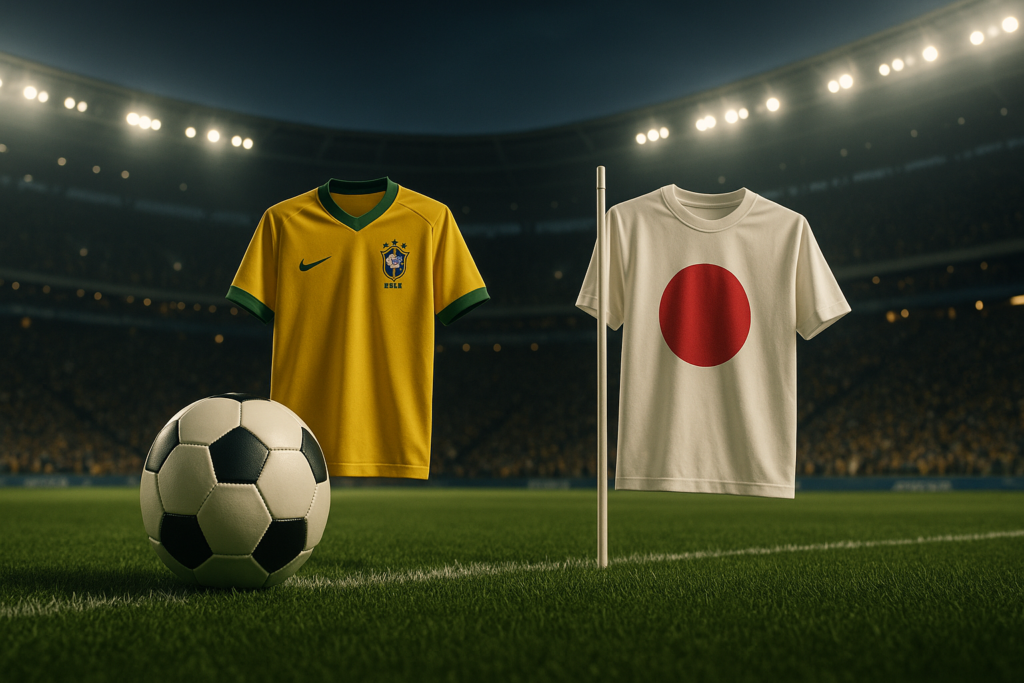
FIFA World Cup 2026: Brazil vs Japan — Who Will Win the Round of 32 Clash?
Short answer: bookies and most models make Brazil the favourite — but this is knockout football, and Japan are a live, tactical underdog who can absolutely make this a proper scrap. In this preview I’ll walk you through the numbers, the tactical matchup, sensible betting angles, and a clear, evidence-based pick (with caveats). No hyperbole — just the facts, the context, and practical insight so you can decide whether to back Brazil, side with Japan, or take a smarter prop bet.
What the market says: odds, implied probabilities and the broad consensus
If you’ve been price-checking, you’ll have noticed Brazil sit as clear favourites but not overwhelming ones. Representative 1X2 prices that appeared in major previews put Brazil around 1.67–1.73 (roughly -145 in US moneyline), the draw around 3.00–3.25, and Japan closer to 4.50 (+400). That translates to roughly 56–60% implied probability for Brazil to win in 90 minutes, and about 20–22% for Japan — with the draw eating the remainder.
Analytical previews like Total Football Analysis recommended Brazil to win (4/6 in their snapshot) and flagged over 2.5 goals as a likely companion market. Betting write-ups such as ToffeeWeb’s preview showed similar pricing (best-book Brazil ~1.73) and medium confidence in Brazil. On the flip side, value-focused columns like the one at Yahoo Sports saw sense in the draw as a high-value alternative.
Why those percentages matter: a 55–60% implied chance is meaningful but not a steamroller. Combined, draw + Japan odds imply the market thinks Brazil will fail to win in 90 minutes roughly 40–45% of the time — not negligible in knockout football, where variance and tactical shifts are amplified.
How we got here: tournament form, recent results and head‑to‑head context
Numbers from the group stage feed the market view. Brazil impressed statistically: they scored multiple goals (six in two group wins, including a 3–0 dispatch of Scotland) and conceded just once in the group phase. That offensive firepower and a tidy goals‑against record underpin the favourite tag.
Japan’s route looks different but alarming in its own way: they qualified as group runners‑up, conceded three goals across group matches, and are known for tactical discipline and compact transitions. Importantly, Japan recorded a famous 3–2 comeback against Brazil in Tokyo in October 2025 — their first-ever win over the Seleção — and that result leaks into narrative and value charts. The Evening Standard highlighted that game when making a contrarian upset call.
Head‑to‑head over the long run heavily favours Brazil (historically about 11 wins to 1, with a few draws), but recent form and the Tokyo upset show that raw history isn’t the whole story. In short: Brazil have better recent tournament form on paper, Japan have the tactical blueprint and confidence to create real trouble.
Tactical matchup: how each side will try to win (and where the game could be decided)
Let’s break this down like coaches do — where are the advantages and the vulnerabilities?
- Brazil’s clear strengths: top‑end attacking talent and depth. Players like Vinícius Júnior and Matheus Cunha have been highlighted across previews for their ability to unlock low blocks and punish mistakes. Multiple outlets expect Brazil to press, rotate the ball wide, and create high-quality chances — hence the support for over 2.5 goals and BTTS markets in analytical previews such as Total Football Analysis.
- Brazil’s risks: knockout nerves, momentary lapses, and a tendency to be punished on the counter if they commit men forward. Despite conceding only once in group play, many analysts expect Brazil to be scored on here — Japan’s fast transitions can exploit space behind inverted fullbacks or in transition.
- Japan’s strengths: tactical organisation, work rate, and transition speed. Under coach Hajime Moriyasu they’re disciplined in structure and lethal in quick counters. Rotowire’s tactical preview argued Japan are “no pushovers” and will make Brazil work for every chance (RotoWire).
- Japan’s risks: defensive fragility when forced to chase the game. Conceding three in the group stage and letting Brazil come back at them in recent meetings suggests they can be opened up if the scoreboard forces them forward.
In practical terms, expect Brazil to control possession and probe; expect Japan to sit slightly deeper early, look for set-piece and transitional chances, and try to frustrate the Selecao into mistakes. The game-plan that gets executed better — and the side that makes fewer high‑risk passes in dangerous zones — will likely decide it.
Betting angles that make sense (and why they matter)
If you’re reading this as a gambler, treat markets like information, not prophecy. Here are the angles the market and analysts keep returning to, and why they’re sensible:
- Brazil to win (regulation) — The consensus play. Implied odds (≈1.70–1.73) reflect Brazil’s superior firepower and group form. This is the “safe” favourite play, but returns are modest and value thin.
- Brazil & Over 2.5 goals / BTTS — Several previews, including Total Football Analysis, flagged Brazil’s attacking depth as a reason to expect goals. Given Brazil’s tendency to create chances and Japan’s counter/transition threat, the combination markets (Brazil win + over 2.5 or BTTS) are logically coherent and offer slightly better value than a straight moneyline.
- Draw (90 minutes) — The value contrarian. Outlets such as Yahoo Sports recommended the draw at roughly +291 as an attractive runner‑up play, arguing the market underprices a tightly contested knockout game that could be decided in extra time.
- Japan +0.5 or Double Chance (Japan/Draw) — If you want to own an underdog with protection, +0.5 or DC can be sensible. This reduces payout but increases probability of a useful result; it’s exactly the sort of play bettors take when the favourite is decent but not dominant.
- Exact scores: 2–1 or 3–2 Brazil — Most model predictions cluster around Brazil winning by a single goal (2–1 is the modal forecast). If you like shots at bigger prices, those exact-score markets reflect the tactical expectation (open, goals, Brazil marginally ahead).
Practical tip: match stakes to the probability edge you think you have. If you think Brazil is only a 50% team but markets price them at 58%, the +EV play is to fade the moneyline. If you think Brazil’s attack will create more than a single clear-cut chance, BTTS or over 2.5 may be better ways to express that view.
Research and my educated pick (with limits)
After weighing market odds, group stage form, head‑to‑head history, and tactical matchup, the most consistent conclusion is:
- Most likely outcome: Brazil win in regulation, probably by a one‑goal margin (2–1 is the most common forecast in tactical previews).
- Alternatives of real probability: Draw in 90 minutes (leading to extra time) or a Japan shock win — combined these carry ~40–45% probability per the market.
So what would I personally back if I had skin in the game? A Tiered approach that balances probability and value:
- Small stake: Brazil to win (90 minutes) — sensible, short-priced, high-probability play. Supported by multiple analytical previews including ToffeeWeb and modelers at Total Football Analysis.
- Medium stake: Brazil & BTTS (or Brazil & Over 2.5) — higher return, still aligned with tactical expectations (Brazil attack + Japan counters). Many tipsters and previews point to both teams scoring here.
- Small speculative bet: Draw (90 minutes) or a small double‑chance on Japan — this is the “value” contrarian if you think the market understates Japan’s organized defence and recent psychological edge from the 3–2 comeback in Tokyo noted by the Evening Standard.
Important caveat: these are probabilistic judgments, not guarantees. Knockout football has outsized variance — a single red card or a momentary lapse can flip results. Treat all staking with bankroll management and never chase losses.
Managing risk: bankroll tips and responsible betting notes
If you decide to bet, follow a few basic rules:
- Stake sizing: Don’t risk more than a small percentage (1–3%) of your bankroll on a single outright result. If you place multiple correlated bets (e.g., Brazil win and Brazil & BTTS), reduce stakes because the bets are not independent.
- Shop for price: Minor odds differences matter. The same Brazil moneyline might be 1.70 at one book and 1.73 at another. Over time that adds up — check two or three reliable sportsbooks before committing.
- Use props to manage variance: If you want to back Brazil but don’t like the thin moneyline juice, a Brazil & Over 2.5 or BTTS market can give better payout while still reflecting your view.
- Know the rules: Understand how your sportsbook treats extra time and penalties for the markets you use (some markets settle on 90 minutes only, others include extra time).
- Keep it fun: These games are entertainment. If the bet stops being fun because of stress or size, it’s too big.
For bettors who want an authoritative, regulatory perspective on responsible gambling, consult your local gambling regulator’s resources (responsible gaming pages on major regulated sites are good starting points) and the terms of the sportsbook you use.
FAQ
1. Who is the favourite to win this Brazil vs Japan Round of 32 match?
Bookmakers and most analytical previews list Brazil as the favourite with implied probabilities around 55–60% to win in regulation. Representative sources include tactical previews and betting snapshots at Total Football Analysis and betting write-ups like ToffeeWeb.
2. Is Japan a realistic upset threat?
Yes. Japan are a legitimate underdog with tactical discipline and the psychological belief from their October 2025 3–2 win over Brazil. Analysts at outlets such as the Evening Standard point to that result as proof Japan can hurt Brazil, and value-based columns (e.g., Yahoo Sports) like the draw as an attractive play.
3. What scorelines do analysts favour?
The modal forecast across previews is Brazil 2–1 Japan. Other common predictions are Brazil 3–2 (an open, high-scoring affair) or a tight 1–0/1–1 that goes to extra time. RotoWire and multiple tipsters cluster around a one‑goal Brazil win.
4. Which prop markets look interesting?
Both Teams To Score (BTTS) and Over 2.5 goals are widely suggested as strong angles because Brazil’s attack and Japan’s transitional threats make goals probable. Exact-score markets (2–1 Brazil) also reflect the most common tactical forecasts and can offer decent payouts for a small stake.
5. Should I back Brazil on the moneyline?
It depends on what you value. The moneyline is the highest-probability, lowest-return option and is a logical play if you accept the bookies’ implied probabilities. If you seek more value, consider combination markets (Brazil + BTTS) or small contrarian stakes on the draw or Japan double‑chance.
6. How much should I stake if I want exposure?
Follow bankroll management: limit a single straight bet to a small percentage of your bankroll (commonly 1–3%). If you place multiple bets that overlap in outcome (e.g., Brazil win and Brazil & Over 2.5), reduce stakes because the bets are correlated.
7. Do head‑to‑head records matter here?
Long‑term head‑to‑head heavily favours Brazil, but the recent 3–2 Japan win in 2025 changes the short‑term dynamic and gives Japan a psychological edge. Use head‑to‑head as one input among form, tactics, and match context rather than a determinative factor.
8. Where can I read tactical previews and deeper analytics?
Good starting points from the research set include the tactical breakdowns at RotoWire and the model-driven piece at Total Football Analysis. For mainstream match previews and odds snapshots, consult outlets like ToffeeWeb and the Evening Standard.
Conclusion
Brazil are the sensible favourite — better firepower, cleaner group results, and market backing put them ahead. But this tie is the kind of knockout fixture where tactical discipline, mental resilience, and a well‑executed game‑plan can overturn probabilities. Japan have the tools to complicate things: an organised structure, transition pace, and the recent head‑to‑head victory that tells them they can score against Brazil.
If you’re betting, consider splitting exposure: a modest stake on Brazil to win (for probability), a medium stake on Brazil + BTTS or Over 2.5 (for value), and a small contrarian punt on Draw or Japan +0.5 if you like the upset narrative. Whatever you do, size stakes responsibly and treat every wager as a probabilistic bet — not a certainty. And enjoy the match: knockout football is where favourites get tested and underdogs make headlines.