Most Played Card Games Online by Metrics and Platforms

Most played card game online: Why the answer depends on what you mean Ask “what’s the most played card game online?” and you’ll quickly find the polite truth of the games industry: the answer depends on which metric, platform and definition you use. Is “card game” a single‑player deckbuilder on Steam? A cross‑platform collectible card game (CCG) with millions of mobile downloads? Or the classic card you learned as a kid—Solitaire or UNO—when played on a phone? The short version: among dedicated digital trading card games (TCGs), Hearthstone, Yu‑Gi‑Oh! Master Duel and Marvel Snap lead by scale; on PC’s Steam, a single‑player roguelike deckbuilder (Slay the Spire 2) sits at the top of the “card” tag by concurrent users; and in general public familiarity, Solitaire and UNO still dominate. Why metrics matter: concurrent players, installs, revenue and familiarity When industry people say “most played” they usually mean one of four things: concurrent players (how many people are online at the same time), total active users or installs, gross revenue, or broad public familiarity (how many people have ever played a game). Those measures don’t always point to the same title. Concurrent players capture live activity. That’s what SteamDB shows for games tagged “Card Game” on PC and why a successful single‑player title can top the list. Total players / installs are good for scale: free‑to‑play mobile games with tens of millions of downloads look huge here. Revenue shows commercial strength and how well a monetization model works—important to publishers and investors. Familiarity surveys (like YouGov) tell you which games are culturally ubiquitous—handy when you write for mainstream readers. So before declaring one game “the most played,” pick the right lens. Below I walk through the major datasets and what they mean for players and operators. PC/Steam: Slay the Spire 2 and the quirks of the “card game” tag If you filter Steam by the “Card Game” tag you get real‑time concurrent statistics—useful, but also messy. SteamDB’s live charts show a surprising result: the top title by concurrent players is Slay the Spire 2, a single‑player roguelike deckbuilder. At the time the data snapshot was taken, Slay the Spire 2 had roughly 116,000 current players, a 24‑hour peak near 119,000 and an all‑time peak around 575,000. You can see the live charts on SteamDB’s card game page. (SteamDB card game charts). Right behind it on the Steam charts sits Yu‑Gi‑Oh! Master Duel, a traditional PvP TCG with roughly 23,000 concurrent players at the same snapshot (24‑hour peak ≈25,000; all‑time peak ≈263,000). MahjongSoul and several other titles also show up in the card tag’s top ranks, but with smaller peaks. All of these figures come from the same SteamDB dataset (SteamDB charts). Important nuance: Steam’s tagging system groups competitive digital TCGs and single‑player deckbuilders together. That’s why a solo roguelike can appear as “the most played card game on Steam” even though it’s a different play experience than Hearthstone or Master Duel. For players this distinction matters: if you want head‑to‑head matches, Steam’s top “card” game may not be what you expect. The “big three” digital TCGs and the rapid rise of Pokémon Pocket Look beyond Steam and toward cross‑platform mobile/PC/console figures and a different picture emerges. A 2026 industry commentary identifies a “big three” of contemporary digital TCGs: Hearthstone, Yu‑Gi‑Oh! (Master Duel / Duel Links), and Marvel Snap. Those titles dominate by total players and market footprint rather than by moment‑to‑moment concurrent counts (industry video analysis). The rough audience estimates cited in that commentary are useful perspective: Hearthstone: about 58 million players Yu‑Gi‑Oh! Master Duel: about 41 million players Marvel Snap: about 26 million players Pokémon Pocket: called out as a breakout, with roughly $669 million in revenue—an indicator of a large, engaged player base even if the figure is revenue rather than installed accounts. (Source: industry video analysis.) Those numbers show how scale shifts when you include mobile and consoles. A collectible card game with a beloved IP—like Yu‑Gi‑Oh!, Pokémon or Marvel—has both reach and monetization power. That matters if you’re a player deciding where to invest time: big audiences mean faster matchmaking, more content creators, and larger secondary markets for tips and deck guides. Trading card games: the heavyweight category in market terms Stepping back from digital specifics, market research makes a broader point: trading card games (TCGs) rank at the top of commercial card‑game categories. A Zion Market Research report finds the TCG segment dominates when you consider overall market significance—physical and digital combined—and notes sports subgenres (baseball cards in particular) are extremely common in the physical trading card market (Zion Market Research: Trading Card Game Market). Why this matters: commercial value drives investment. When publishers and IP holders see strong revenue potential—through pack sales, cosmetics, events and merchandising—they pour development and marketing dollars into digital versions. That’s why you see licensed IPs like Pokémon and Marvel quickly scaling up in the digital space: the infrastructure for monetization already exists in the physical TCG ecosystem. Casual giants: Solitaire, UNO and Blackjack—familiarity vs. platform activity If you ask a general audience which card games they’ve played, the answers skew toward household staples. YouGov polling across 30 card games shows extremely high lifetime familiarity for Solitaire (about 83% of Americans), Go Fish (79%), Blackjack (70%), Old Maid (66%) and Poker (60%) (YouGov: how Americans feel about 30 card games). Other surveys that look at “most played” in a general consumer context (online and offline combined) also place Solitaire and UNO at the top—Troypress reports Solitaire at about 32% played within its survey window, UNO 29%, and Blackjack 25% (Troypress: most played board and card games). What this tells you: cultural familiarity is broad for a handful of casual classics. They dominate conversation and casual mobile installs even if they don’t always top concurrent player charts for PvP digital TCGs. For example, a casual Solitaire app may have millions of downloads and steady daily players, but it won’t generate the same esports‑style tournament ecosystem as Hearthstone or the same pack‑sale
Smart Online Slots Tips to Improve Your Play Today
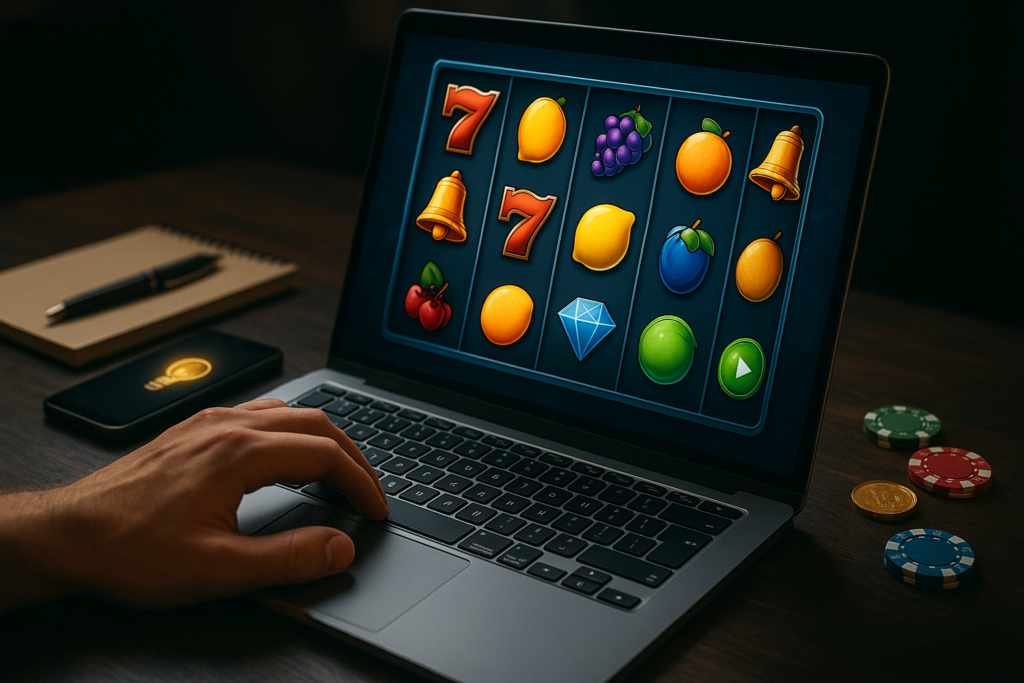
Online Casino Slots: Practical Tips and Tricks That Actually Help If you play online slots for fun, you’ll want to squeeze as much entertainment and value from your sessions as possible — and if you’re trying to preserve a bankroll, smart play matters even more. Let me be blunt: there’s no secret “hack” that beats the game engine. Online slots are built around a house edge, and the outcomes are driven by a Random Number Generator (RNG). But that doesn’t mean you’re powerless. By picking the right games, staking sensibly, using bonuses intelligently, and managing sessions with discipline, you can meaningfully improve your experience and protect your money. Below I walk you through what really matters, what’s myth, and practical steps you can use tonight. I’ll reference industry guidance and tools so you can check original sources yourself. How online slots actually work — why the myths don’t help The core technical fact to remember is this: online slots use a Random Number Generator (RNG), so every spin is independent. The result you get on one spin doesn’t make the next spin more or less likely to pay out. That’s why common beliefs about “hot” or “cold” machines, or being “due” for a jackpot, are wrong. The best accessible explainer I’ve seen on this is with PokerNews, which breaks down RTP, RNG and why timing systems are myths: How to win at slots — PokerNews. Two practical metrics are what the house edge is built from: RTP and volatility. RTP (Return to Player) is a long‑run average — a 96% RTP means that, hypothetically, the game returns £96 for every £100 wagered over millions of spins. It is not a promise of what you’ll get in a single session. Typical online slot RTPs sit in the 94–97% band; for better odds you should target 96% or higher. (Multiple operator and expert guides recommend this approach; for example see the slot tips at BetMGM’s slots tips.) Volatility (also called variance) matters as much as RTP. Low‑volatility slots pay smaller wins more frequently — they’re kinder to small bankrolls and longer sessions. High‑volatility games deliver bigger wins but with long dry spells; you need the bankroll and temperament for those swings. A clear primer on balancing RTP and volatility for your bankroll is available from Metropolitan Casinos: Slots games & strategies — Metropolitan Casinos. Key takeaway: you can’t change RNG outcomes. The real, practical edges you control are game selection (aim for higher RTP and volatility that fits your bankroll), stake sizing, bonus usage, and discipline. Bankroll management: the single most important “trick” Every credible source I read puts bankroll control front and centre. Why? Because mathematics and psychology combine: even with good game choice, variance will eat unprepared players. Here’s how to make bankroll management do the heavy lifting for you. Set a total gambling budget. Decide beforehand the absolute maximum you can afford to lose and treat that money as entertainment. Split it into session bankrolls so one bad night doesn’t wipe out your entire month. This is practical advice repeated by multiple expert guides, including MGM Resorts’ player tips: Tips on how to play and win at video slot machines — MGM Resorts. Use a per‑spin staking rule. A common, sensible rule is the “1% rule”: risk no more than about 1% of your bankroll on a single spin. That keeps variance manageable. For example, with a £200 bankroll you’d keep spins around £2. That gives you 100–200 spins to ride out normal swings and lets you actually experience the game’s features instead of blowing up immediately. The 1% guideline is widely taught in slot strategy content and tutorials. Set stop‑loss and win limits. Decide in advance when you’ll stop a session: a typical approach is to stop after losing 50% of the session bankroll or after winning 30–50%. MGM explicitly recommends win limits to lock in profits rather than giving them back. If you hit your target, cash out some or all of your winnings. Use site limits and tools. Most regulated casinos let you set deposit, loss and session limits on your account; use them. They’re a practical way to enforce your decisions automatically and prevent emotional over‑bets. Practical habit: before you play write down — total budget, session budget, max stake per spin, stop‑loss, and cash‑out target. Stick to it. The discipline will save money and make the hobby sustainable. Choosing the right slot: RTP, volatility and configuration Game choice is where you convert theory into practice. Several concrete levers move the needle for a player: RTP, volatility, denomination and how the game expects you to bet to unlock features or jackpots. RTP — set a sensible baseline Aim for RTP ≥ 96% as your baseline. Many casinos and databases let you filter games by RTP so you can prioritise higher‑return titles. If a casino provides transparent payout statistics or audited RTP reports, that’s a strong signal of a well‑regulated operation. When you see games advertised at 97%+, they’re worth considering — provided other factors fit your plan. Volatility — match the game to your bankroll If your budget is small (under £50), favour low‑volatility slots with low minimum stakes so you get longer play and fewer destructive swings. If you have a larger bankroll and are aiming for big bonus rounds or jackpots, medium or high volatility is acceptable — but plan for long dry spells. Metropolitan Casinos’ guide covers volatility tradeoffs in easy terms: Slots games & strategies — Metropolitan Casinos. Denominations, lines and max‑bet rules Always check the denomination and total bet before you hit spin. Many players accidentally play at higher stakes than intended. If a slot requires a max bet to qualify for a bonus or jackpot, either bet the max if it fits your staking plan or avoid the game. Some practical rules: Play all paylines at the lowest coin value that fits your 1% per‑spin rule so you don’t miss wins on specific lines. If the top prize
Understanding Card Counting in Blackjack A Practical Guide

What is card counting in blackjack? A practical guide for players Card counting often gets hyped in movies as an elite skill that turns casinos into piggy banks. The reality is both simpler and more subtle: it’s a mental technique that helps you estimate whether the remaining cards in the shoe favor the player or the house, and then adjust your bets and a few decisions accordingly. Done properly, it can flip the long‑term edge by an amount measured in percentages—not in guaranteed jackpots. Below I’ll walk through how it works, why it matters, what it takes to do it well, and the pitfalls and legalities you need to keep in mind. Why card counting actually works Blackjack isn’t a series of independent spins like a roulette wheel; it’s a sequence of dependent events. Every card dealt changes the composition of the remaining deck, and that changes the odds on the next hand. When the shoe is rich in high cards (tens and aces), blackjack swings toward the player for two big reasons: More blackjacks for players — and blackjacks usually pay 3:2, which is a high‑value outcome for the player. See a clear primer on the counting concept at Blackjack Apprenticeship’s how‑to. Dealers bust more often on stiff totals (12–16) when they have to hit into a deck heavy with high cards, improving the player’s chances of winning hands. Conversely, a shoe with an overweight of low cards (2–6) helps the dealer because they’re less likely to bust and the dealer’s forced‑hit rules work to the house’s advantage. The aim of counting is therefore to monitor whether the remaining shoe is “rich” or “poor” in high cards and change your bet size and some plays when the odds shift. The core mechanics: running count → true count → betting Most modern counters use a simple, reliable system called Hi‑Lo. It’s popular because it offers a good tradeoff between ease and accuracy. Step 1 — Assign values (Hi‑Lo) +1 (low cards): 2, 3, 4, 5, 6 0 (neutral): 7, 8, 9 −1 (high cards): 10, J, Q, K, A The logic is straightforward: when low cards leave the shoe (added +1), the remaining deck becomes relatively richer in high cards — good for the player — and your count rises. When lots of high cards leave (−1), the count falls. Step 2 — Keep a running count You start each shoe at 0. Then every card dealt (to other players, to the dealer, and to you) is added or subtracted according to the Hi‑Lo values. For example, if the visible cards are 3, K, 5, your running count updates as +1, then −1, then +1, ending at +1 for that sequence. This running count is the raw gauge of whether more high or low cards have been dealt so far. Step 3 — Convert to the true count for multi‑deck games Casinos mostly use multiple decks in a shoe, and the same running count means different things with one deck left versus six. To normalize this, divide the running count by the estimated number of decks remaining. That gives you the true count, which is the signal you use to size bets and, sometimes, deviate from basic strategy. Example from practice: if your running count is +9 and you estimate about 4.5 decks remain, your true count is roughly +2. True count represents how concentrated the high cards are per remaining deck and is the meaningful measure of advantage. A plain explanation of the conversion and why it matters is available in Jim Makos’s how‑to guide: How to Count Cards in Blackjack. Step 4 — Adjust bets and plays Two practical levers are available to a counter: Bet sizing: When the true count is low or negative, you generally bet the table minimum. As the true count rises, you increase your bet proportionally because the player’s long‑term edge increases. Betting more when the deck favors you is where the money primarily comes from. Strategy deviations: Advanced counters sometimes depart from basic strategy in specific spots (for example, taking insurance only at sufficiently high counts, or standing/ hitting in borderline hands influenced by count). However, perfect basic strategy is the foundation — if you don’t execute it, the small edge you earn from counting disappears. Instructional videos and demonstrations provide useful examples; two well‑made explanatory videos are here: Why counting works (YouTube) and Hi‑Lo counting walkthrough (YouTube). What card counting is not — and realistic expectations Hollywood sometimes shows card counters memorizing the entire sequence of cards — that’s an exaggeration. True counting tracks the ratio of high to low cards, not every card identity. It’s a statistical adjustment, not clairvoyance. Second, counting doesn’t guarantee big short‑term wins. A competent counter’s edge is typically on the order of about 1% of action (often less than a few percentage points). A 1% edge means you expect to win about $1 for every $100 wagered in the long run, but because variance is high you will still experience losing stretches. For a technical overview of typical edge estimates, see the 2024 Stanford course paper: Blackjack card counting (Stanford paper). Finally, counting with your head is not cheating under most laws, but casinos treat it as an unwelcome activity. They can ask you to stop playing, reduce permitted bet sizes, or bar you from tables or property entirely. For practical guidance and the industry perspective on casino countermeasures, see the WikiHow overview: How to Count Cards in Blackjack (WikiHow). What skills and preparation you need Card counting is a skill set, not just a trick. Here are the core prerequisites and why each matters: Flawless basic strategy: Basic strategy minimizes the house edge in the absence of counting. If you play basic strategy poorly, you throw away the small gains that counting earns. Accurate, real‑time counting: You must maintain the running count while cards are dealt to others, handle conversations, and make betting choices — all in a casino environment. That requires practice