
Online Blackjack vs Poker — Which Card Game Fits You
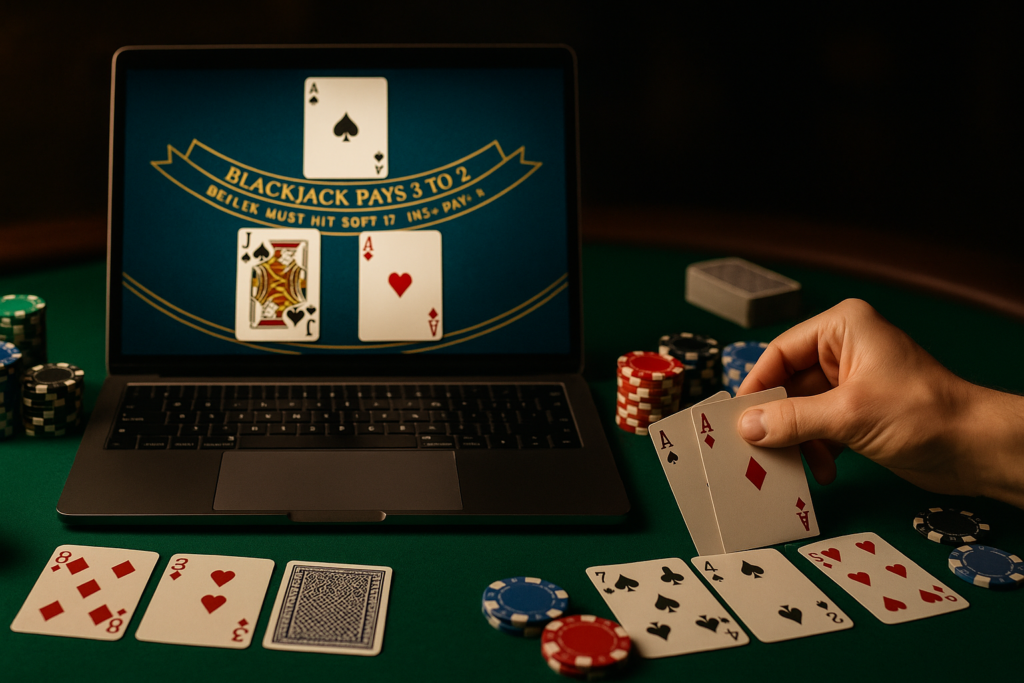
Online Poker vs Blackjack: Which Card Game Fits You? Blackjack and online poker are two of the most visible card games in casinos, but they’re fundamentally different animals. One is a head‑to‑head battle against a fixed system; the other is a market of players trying to outthink each other. If you’ve sat at an online table and wondered which game better suits your temperament, bankroll and goals, this piece lays out the practical differences—using the numbers and observations operators and experts publish—so you can decide with your eyes open. Core structural differences: who are you actually playing? Start with a simple question: who are you trying to beat? In blackjack you’re playing the dealer (the house). Every hand is resolved against the dealer’s predetermined rules—hit until 17, stand otherwise, and so on—so the interaction is mechanical and transparent. That’s the point emphasized in this comparison from Blackjack Review and other operator-facing writeups: blackjack is a “house game with a known mathematical edge.” See the Blackjack Review comparison for more background: Blackjack Review: Online Blackjack Versus Online Poker. Poker is almost the opposite. Online poker rooms charge a fee (rake) and let players compete against one another—your winnings come from other players, not from the site. That means your long‑term success depends on how much better you are than the field, not on a fixed game bias. Blue Lake Casino’s primer explains this cleanly: Blue Lake Casino’s blackjack vs poker overview. Why this matters: when you play blackjack you’re facing a built‑in house expectation every hand; in poker you’re facing a constantly shifting set of human opponents, and your edge is relative rather than absolute. House edge, rake and long‑run expectation One of the clearest practical differences between the games is the payoff calculus. Blackjack: With standard rules and correct basic strategy, the house edge typically sits around 0.5%–2% of the wager. Rule tweaks—number of decks, whether the dealer hits or stands on soft 17, or a dreaded 6:5 payout for blackjacks instead of 3:2—can move that number materially. The typical operator breakdown is well summarized in operator material and game guides such as Blue Lake’s discussion and broader guides like the one from WinStar: WinStar’s Blackjack vs Poker comparison. Poker: There is no fixed house edge on the game outcomes. Instead the poker room takes a cut of the action—rake—typically in the 2.5%–10% range on cash pots or through tournament fees. That rake creates the cost of doing business, but skilled players can still be net winners because they extract value from weaker opponents after rake is accounted for. Blue Lake’s primer cites typical rake structures and explains the implications for player profitability: Blue Lake Casino’s blackjack vs poker overview. Practical takeaway: if you want predictability about the game math, blackjack gives it—your downside is a small, known expectation against perfect play. If you’re chasing the opportunity to be a winner in the long run, poker structurally allows that—provided you can outplay the player pool and overcome rake. Skill, psychology and the depth of decision‑making Both games reward skill, but the kind and depth of skill differs sharply. Blackjack is a rules‑driven, math‑first game. There’s a compact decision set—hit, stand, double, split, occasionally surrender—and a clear optimal baseline called basic strategy. Learn the chart, apply it, and you have removed a large portion of the avoidable mistakes. Beyond that, advantage play in physical casinos—card counting, shuffle tracking—has historically offered positive expectation, but those techniques are difficult or impossible in regulated online RNG games and can get you barred in live venues. Blackjack Review discusses these structural realities in its comparison: Blackjack Review piece. Poker is more like a chess match mixed with psychology: hand selection, position, pot odds, bet sizing, ranges and timing reads. You’ve got to size bets relative to the pot, anticipate opponent ranges, and use bluffing as a tool. Over time, good players build sophisticated processes—GTO (game theory optimal) concepts layered with exploitive deviations—and the skill set grows with study and experience. That’s why many operators and educators point out poker’s higher learning ceiling compared with blackjack’s essentially rule‑based play: see the discussion in Blue Lake and WinStar’s blogs. Why this matters: If you enjoy procedural, low‑variance optimization (learn a chart, execute), blackjack will feel comfortable. If you prefer games that reward creative thinking, pattern recognition and psychological leverage, poker offers depth and a higher ceiling. Learning curve, accessibility and first‑time players If you’re new to card games and want to get into action quickly, blackjack wins on accessibility. The rules are simple, and basic strategy is a small, memorisable matrix of decisions. Online RNG blackjack removes time pressure and seat availability issues—instant play, lower minimums and the ability to move at your own pace—making it friendly to beginners. BetMGM’s live vs online blackjack guide highlights these practical differences between RNG and live formats and why online RNG is often more beginner‑friendly: betMGM: Live vs Online Blackjack. Poker carries a steeper learning curve. Beyond learning hand rankings and betting rounds, you must internalize concepts like position, pot odds, implied odds, stack depth strategy, and opponent profiling. Mistakes in poker can be far costlier because every betting decision affects pot size and future dynamics. Practical advice for newcomers: Start at low stakes in both games. In blackjack, use a basic strategy chart and flat betting. In poker, begin in micro‑stakes cash or freeroll tournaments to learn player tendencies without large financial risk. Focus on one game long enough to build procedural fluency—learn the mechanics of decision timing in live dealer blackjack, and learn the structural lines (preflop, flop, turn, river) in poker. Variance, bankroll and who risks what Variance is where the games feel very different at the table. Blackjack typically produces lower variance per hand than poker when played with flat bets and basic strategy. Because the house edge is small, bankroll swings tend to be smoother—but remember, “smoother” does not mean “profitable.” Outside of rare advantage situations (counters in live games or promotional play), the
Poker Hold’em for Beginners A Practical Hands-On Guide
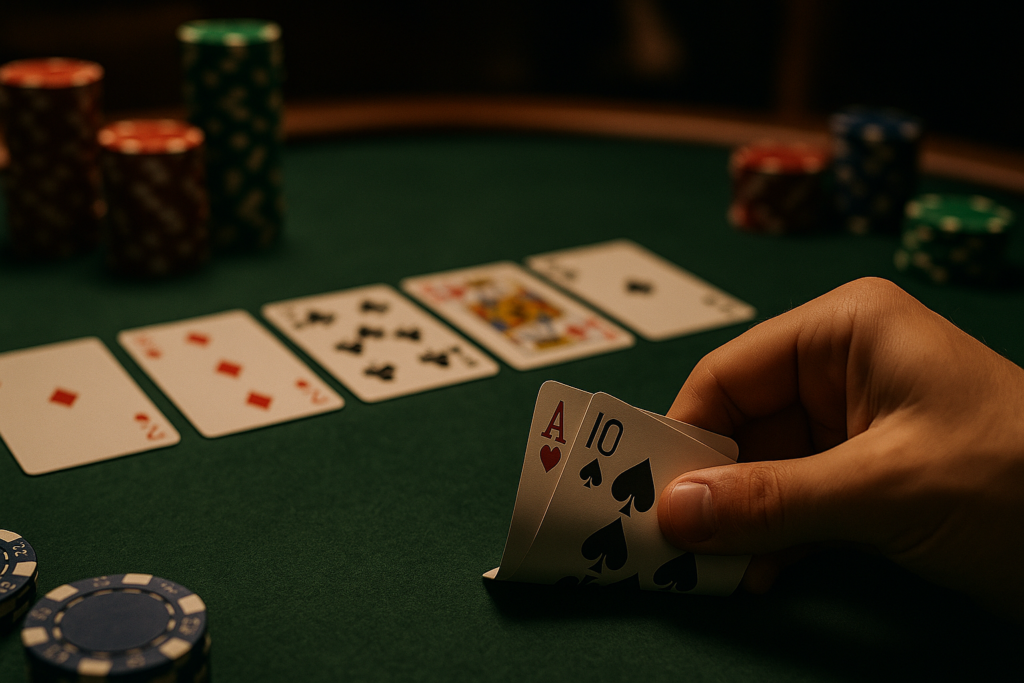
How to play poker: a friendly, practical guide (focused on Texas Hold’em) Poker is a family of betting card games built around the same core idea: win chips by making the best five‑card hand at showdown or by making your opponents fold before showdown. If you’re starting out, the clearest entry point is Texas Hold’em — it’s the variant you’ll see in most home games, casinos and online tables. The rules are straightforward, but doing well takes deliberate practice. This guide walks you through the rules, the key concepts that matter, a step‑by‑step Hold’em hand, basic strategy for beginners, and a study plan to actually improve. Sources and further reading are linked throughout so you can dig deeper. For a concise reference on what poker is and its standard rules, see the general overview at Wikipedia: Poker. For a clear, player‑friendly breakdown of the basics, check Bicycle Cards’ primer at Bicycle Cards: Basics of Poker. If you want an academic take on practical strategy, the MIT course materials on Hold’em are excellent: MIT OCW — How to Win at Texas Hold’em. 1) Core concepts everybody needs to know Before you sit down, you must understand four things: hand rankings, betting actions, turn order/position, and the specific rules of the variant you’re playing. These are the baseline across almost all poker games. Goal: win chips either by having the best 5‑card hand at showdown or by betting in a way that makes everyone else fold before showdown. Hand rankings: every common poker variant uses the same standard 5‑card ranking from high to low — royal flush, straight flush, four of a kind, full house, flush, straight, three of a kind, two pair, one pair, high card. For a compact list of those ranks, see the MIT course material summary at MIT OCW: study materials. Betting actions: on your turn you can usually check (if no bet has been made), bet, call (match a bet), raise (increase the bet) or fold (discard your hand and stop investing in the pot). The betting round ends when all active players have folded or matched the last bet. Forced bets (blinds/antes): most modern games use forced bets to create action. Hold’em uses a small blind and big blind posted by the two players left of the dealer; other games sometimes use antes where everyone contributes a small amount before cards are dealt. Why this matters: get these fundamentals nailed down before you try strategy. If you don’t know the hand rankings, you’ll misvalue hands; if you don’t understand betting options and turn order, you’ll lose chips from procedural mistakes rather than strategic errors. 2) Turn order, the dealer button, and why position is king Turn order in poker is not random — it’s determined by the dealer button and the blinds, and that creates positional advantages and disadvantages. The dealer button rotates clockwise each hand and determines who posts the blinds and who acts when. Deal and action go clockwise: cards are dealt clockwise from the dealer; betting action follows the table order as well. Key Hold’em positions: the player left of the dealer is under the gun (UTG) preflop and acts first; the cutoff is one seat to the right of the dealer; the button (dealer) acts last on every postflop street. Acting later is valuable because you see opponents’ choices before you decide. Practical insight: because acting last gives extra information, you can play a wider range of hands from the button and cutoff than you should from UTG. Conversely, in early position you must be tighter because you’ll have to act with less knowledge on future betting streets. The MIT course materials discuss positional strategy in more depth; it’s worth a read: MIT OCW: How to Win at Texas Hold’em — study materials. 3) Texas Hold’em: a step‑by‑step walkthrough Texas Hold’em is the most common form of poker and the best starting point. Here’s the standard sequence for a single hand: Setup: standard 52‑card deck; each player starts with a chip stack; dealer button marks the nominal dealer. Post blinds: small blind and big blind are posted to seed the pot (big blind typically 2× small blind). Preflop: each player receives two private hole cards face down. Starting with the player left of the big blind (UTG), players choose to fold, call the big blind, or raise. The big blind acts last preflop. Flop: dealer burns one card and deals three community cards face up. A new betting round begins, starting with the first active player left of the button. Turn: dealer burns a card and deals the fourth community card; another betting round follows. River: dealer burns and deals the fifth community card; final betting round occurs. Showdown: if two or more players remain, players reveal hands and the best 5‑card hand (made from any combination of the two hole cards and five community cards) wins the pot. If all others folded earlier, the last player wins without showing. The MIT OCW materials are a handy reference for the formal steps: MIT OCW: study materials, and for a short visual primer watch this beginner video: Texas Hold’em basics (video). Example hand (simple) Concrete examples help. Suppose the blinds are 1/2 chips and player UTG raises to 6. Two players call; the blinds fold. The pot contains the bets and blinds. Flop: Q♠ 9♣ 2♣. First active player checks, the raiser bets, another calls, and the first player folds. Turn: 7♦, more betting. River: 2♠. Showdown: Player A shows A♠ Q♥ (top pair, queens); Player B shows 9♠ 9♥ (three of a kind, nines). Even though Player A had top pair, Player B’s trips beat it and wins the pot. This example comes from the MIT course materials and illustrates how board texture and pairings can change the winner even when you believe you have a “strong” hand. 4) Beginner strategy essentials — what really moves the needle Learning the rules is step one. The next step is playing smart so