
World Cup 2026 France vs Morocco betting preview QF
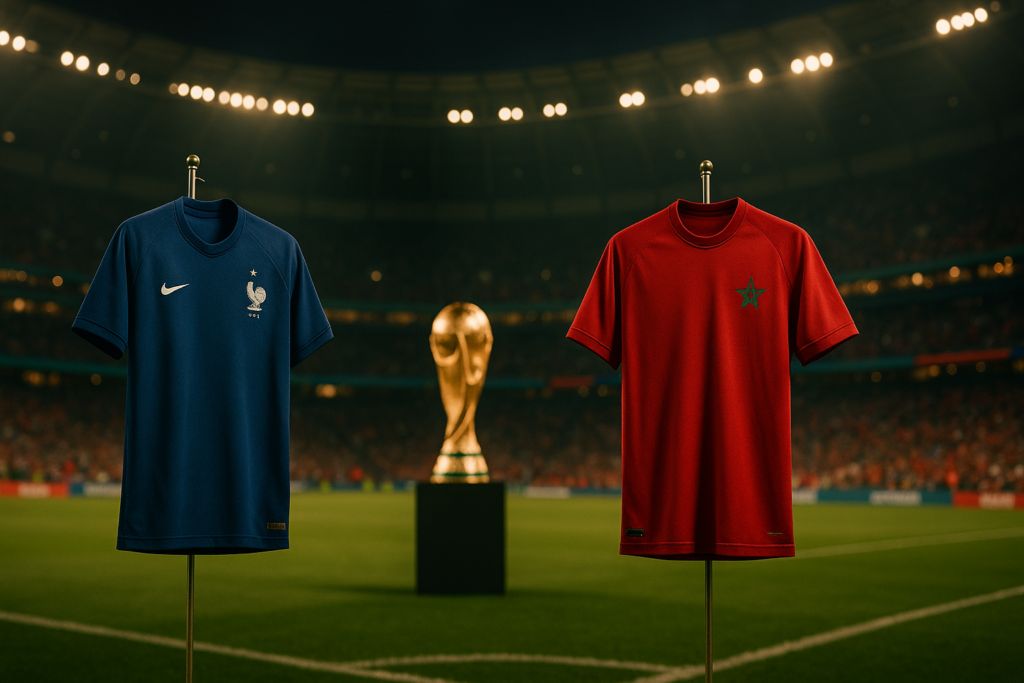
World Cup 2026 Quarterfinal Preview & Betting Guide — France vs Morocco Welcome to the kind of match that makes bettors rub their hands and neutral fans lean forward: France vs Morocco in the World Cup quarterfinals. The consensus from models, markets and most pundits is simple — France are the favorites. But this isn’t a foregone conclusion. Morocco have repeatedly shown they can frustrate the elite and turn knockout nights into chaos. Below I’ll walk you through what the numbers say, why they matter, the realistic scorelines to expect, and practical betting angles (conservative and aggressive). I’ll also cover the injury and tactical context, how to spot value, and how to manage the real risk: variance. Wherever I cite forecasts or market pricing, I’m pointing to the published previews and models that put these figures on the table. What the models and markets are saying If you want a short answer: models and markets line up behind France. The quantitative side is notably clustered around a French win in regulation, with central win probabilities roughly in the low‑60% range. Opta/Analyst projection: France win probability ~60.9%, draw 22.2%, Morocco 16.9% — a clear edge but not an overwhelming one. (The Analyst) Dimers / Syracuse aggregation: France ~60.1% win chance when accounting for draws and extra time; Polymarket‑derived data referenced in Syracuse shows ~63% chance France wins in regulation and ~35% chance they win by 2+ goals. (Syracuse) Pundit panels: ESPN’s quarterfinal roundtable saw 7 of 8 analysts pick France (scorelines commonly 2‑0, 2‑1, 3‑1), and multiple outlets (including ESPN) reflect similar leanings. Book prices reported in previews: lines vary — from a DraftKings‑cited France price near -370 up to mid‑60s implied percentages at other books (bet365, Dafabet references in the previews). Those differences reflect how books factor liability and market flow. (Referenced in the previews above.) Translation for bettors: France are the rational favorite across statistical models and media predictions. But models put Morocco’s outright upset probability in the mid‑teens; that’s small but meaningful for value hunters. Scoreline scenarios — tight, controlled win vs France pulling away There’s a split view among experts on whether this is going to be a controlled, low‑scoring game or one where France’s attackers push the total above two goals. Low‑scoring camp: Several previews emphasize a France win with few goals (1‑0 or 2‑0) — SportsMole even suggests a 1‑0 win after extra time. Squawka’s models tilt slightly toward under 2.5 goals (around 53% in their preview) and highlight France’s defensive solidity. (Squawka) Higher‑scoring camp: Other forecasts (and market spreads) think France’s offensive depth makes 2+ goals likely. Syracuse’s aggregation highlights a near‑50% chance for over 2.5 goals in some markets and a ~35% chance France win by 2+. That’s why you see expert scorelines like 2‑1 or 3‑1 in publications such as ESPN and USA Today. (Syracuse, ESPN) Why it matters: your choice between “France to win to nil” and a “France & Over 1.5” type ticket is more than nitpicking — it’s a statement about how you expect the match to unfold. If you think Morocco will pack in bodies and try to counter, low‑scoring French control is logical. If you believe France’s attackers will break the compactness, backing the extra goal(s) is rational. Key contextual factors shifting the balance There are a few storyline and tactical elements teams and bettors should watch closely. Rematch of 2022 semi: This is a replay of the Qatar 2022 semi‑final, which France won 2‑0. History doesn’t decide the next 90 minutes, but it shapes psychological edges and preparation. Several previews flag that rematch narrative when gauging mental edges. (Syracuse) France’s tournament form: Published previews note France’s sterling run — five wins from five, 14 goals scored and only two conceded in the tournament per Squawka’s summary — which supports the “France control” view. (Squawka) Morocco’s DNA: Morocco have an underdog, organization‑first identity that has produced upsets in recent major tournaments (and knockout resilience). Many writers stress Morocco’s talent for frustrating top teams and hitting on transitions. (Fox Sports) Injuries: France will be missing Aurélien Tchouaméni for this match due to a groin problem — an absence mentioned in Syracuse’s betting preview. That’s tangible for midfield control and how France might manage central space. (Syracuse) Bottom line: France bring more firepower and finishers. Morocco bring system and discipline. If France can eclipse Morocco’s compactness early, the game opens up; if Morocco keeps it tight, expect a low total and a close game. Upset risk — the case for backing Morocco Here’s where the smart money separates from the herd: models give Morocco a genuine, if minority, chance. Opta-based projections show Morocco winning about 16.9% of the time and a draw/extra‑time outcome in roughly 22.2% of simulations. That’s not fantasy odds — it’s a realistic scenario band where an underdog makes the knockout noise. (The Analyst) Why Morocco could upset: Defensive organization: They’ve shown the ability to compact, deny space and force low‑quality shots. Counter‑attack danger: If France commit players forward, Morocco have the speed and transition game to punish turnovers. Penalty / extra‑time realism: As pundits noted, the match can go to a scrappy extra time or penalties — and anything can happen there. ESPN’s roundtable even had a pick for Morocco winning on penalties. (ESPN) For bettors that respect variance: a carefully sized outright on Morocco, or a match‑result parlay that reduces variance, can be justified by the ~15–25% upset window that models and books imply. Practical betting angles and sample notes Below are concrete, source‑informed betting approaches split into conservative and aggressive plays. Remember: none of these are guaranteed winners — they reflect how market odds and model probabilities align. Conservative — protect the bankroll Small single on France to win in regulation: This mirrors the consensus and is fine if you value probability over payout. Models put France around ~60–65% in many aggregations. (Syracuse, The Analyst) France to win + Under 2.5 goals: If you believe Morocco will constrain space and France will
Switzerland vs Colombia World Cup 2026 Betting Odds
Switzerland vs Colombia — World Cup 2026 Round of 16: Predictions, Odds and Betting Guide Short version for the impatient: the consensus from models, bookmakers and previews is a narrow Colombia win in 90 minutes — most commonly a 1-0 or 2-1 scoreline. Markets are pricing Colombia as the slight favorite (roughly +125 to +131), Switzerland is the longer shot (~+240 to +270), and the draw sits around +210 to +220. That doesn’t mean it’s a slam dunk — there are contrarian views backing Switzerland and higher-scoring outcomes — but if you need a single pick, Colombia in 90 minutes is the one most experts are siding with. What the market and models are saying When you look across previews, betting models and sportsbook prices, one theme stands out: this is expected to be tight and tactical, with Colombia the favored side. Sources like RotoWire’s preview and the USA Today Sportsbook Wire both lean Colombia in 90 minutes. A SportsCasting supercomputer projection also favors a low-scoring Colombia victory and explicitly projects Under 2.5 goals in its output (SportsCasting). The consensus scorelines repeating across outlets are 1-0 and 2-1 for Colombia — that tells you a lot about how people expect this game to play out: close, perhaps decided by a single decisive moment or a set-piece, not a high-scoring classic. The market odds — what the price action implies Price-wise, most books have Colombia as the 90-minute favorite, around +125 to +131. Switzerland is drifting in the +240 to +270 range, with a draw priced roughly +210 to +220. Those prices imply an approximate probability distribution: Colombia ~44–45% implied probability, draw ~32–33%, Switzerland ~27–30% (these are back-of-envelope conversions). What those numbers mean for bettors: Colombia being the favorite doesn’t make them a heavy favorite. A single swing (a penalty, a red card, a moment of individual quality) can flip the result. That makes moneyline betting attractive to some — especially if you believe the market underestimates Colombia’s chances — but it also makes draw + win or goal-line markets interesting for people looking for better risk-reward. How experts are turning those odds into bets Across previews you’ll see a few repeated “best bets” themes: Colombia moneyline: The most commonly recommended single-outcome bet among mainstream previews. If you think Colombia’s slight edge is real, the moneyline is straightforward and widely available. Under 2.5 goals: Because most models see a tight, tactical match, Under 2.5 is a frequent recommendation from outlets projecting a 1-0 or 2-1 game. Both Teams To Score (BTTS): This one is split — some expect Colombia to edge a low-scoring game with both teams contributing, while others think Switzerland could be shut out if Colombia control tempo and exploit counter-attack moments. Sources give different spins on which of the above is “best” depending on their model and risk appetite. For instance, several previews recommend Colombia on the moneyline as the cleanest single pick (see RotoWire and USA Today Sportsbook Wire), while the SportsCasting supercomputer explicitly favors Under 2.5 in its projections (SportsCasting). Alternative and contrarian views — don’t forget them Betting markets move for reasons and every consensus has an anti-consensus. Covers.com takes a different line: they back Switzerland and expect a higher-scoring match. That’s a useful reminder. Markets reflect average opinion and initial price discovery — outsize returns often come from correctly identifying when the crowd is wrong. Contrarian angles to consider: Switzerland wins outright — if you see value at +240 to +270 and have reasons to expect Swiss control or clinical finishing. High-scoring outcome — if you believe both sides will commit to attack or that defensive lapses will create chances. Extra-time / penalties — previews occasionally mention the match might need extra time, especially if both managers set up cautiously; keep in mind most standard moneyline markets cover only 90 minutes unless explicitly listed as “match winner (ET/Penalties)”. Match dynamics and why they matter for bettors We don’t have a full tactical dossier here, but the consensus expectation — low-scoring, single-goal margin — is driven by two considerations that every bettor should weigh: Knockout caution: Round of 16 ties tend to be tactical. Teams often prioritize avoiding mistakes over aggressive pressing, especially when both squads have players who can punish transitions. That tends to depress total goals and favors narrow scorelines. Small gap between teams: Odds show Colombia as a modest favorite, not a runaway. When teams are close, variance (luck, refereeing decisions, one big chance) plays a big role — it makes the moneyline a higher-variance play and makes goal-line and props attractive hedges. Why this matters: if you back Colombia on the moneyline, accept that you’re betting on the side with the statistical edge but not a dominant favorite. If you prefer lower-variance plays, markets like Under 2.5 or “Colombia to win and Under 3.5” can offer better value relative to risk. Practical betting ideas and bankroll-minded sizing Below are a few concrete approaches you can use depending on how aggressive or conservative you’re feeling. These are illustrative — not instructions — and assume you’ve already set a bankroll and staking plan for the tournament. Conservative (small stake): Under 2.5 goals — if the books have reasonable juice and you agree a tactical game is likely. This often has lower odds but a better probability of hitting in tight knockout games. Standard pick (medium stake): Colombia moneyline — the pick most outlets favor. Good for bettors who want a single straightforward bet reflecting the consensus. Value/Sharps (small-medium stake): Switzerland moneyline or a draw + Swiss double chance — a contrarian punt if you find Switzerland priced generously after lines tighten around Colombia. Props (small stakes): Both Teams To Score (if odds are attractive), or specific player goal props if you have inside tracking on likely shooters/penalty takers and can find positive expected value. Parlay tip (very small stake): Combine Colombia moneyline with Under 2.5 (or pick another low-variance market) to get better cumulative odds but accept the lower hit rate of
France vs Paraguay World Cup 2026 Betting Odds Outlook
France vs Paraguay — Who will win the World Cup 2026 Round of 16 match? Short answer: everything points to France. The market, the biggest predictive models and most expert previews all line up behind Les Bleus — often by a wide margin. But “everything points to” isn’t the same as certainty. If you’re thinking about a bet, or just want to understand why the gap looks so big, this guide walks you through the numbers, the storyline, sensible betting angles and the realistic way an upset could happen. Market odds: how the books see the match If you glance at mainstream bookmakers you get a very clear message: France are heavy favorites. Several books listed France around -500 to -550 on the moneyline, with Paraguay at about +1400 to +1700 and the draw near +600. That converts to roughly an 84–85% implied win probability for France at -550, and only about 5–7% for Paraguay at +1400/+1700. Those lines are not subtle — the market is pricing this as a near-certain victory for France. (For a snapshot of market lines and context, see the Covers betting preview.) Covers — France vs Paraguay odds and picks Why do the books price it like this? Two reasons: supply and risk. Books balance liability — a popular, strong team priced too short can create lopsided exposure — and they also reflect sharp money (professional bettors) and general market sentiment. When elite teams that have steamrolled group stages meet a low-seeded underdog, the line will get lopsided fast. What the models and expert previews are predicting Independent predictive models mostly agree France are strong favorites, although some models are slightly more conservative than the market odds. Opta’s simulation (via The Analyst) gives France a 80.3% chance to win in 90 minutes and an 86.8% chance to advance, compared with a 6.9% chance of Paraguay winning in regulation. The Analyst — Opta simulations The Dimers model (reported by AZ Central) assigns France roughly 79% win probability, Paraguay 6.1%, and about 15% for a draw after 90 minutes. AZ Central — Dimers model SportsMole’s model is slightly more conservative but still decisive: France 68.05%, draw 20.9%, Paraguay 11%. SportsMole — match model On the pundit side, scoreline predictions cluster around France winning by one to three goals: SportsMole forecasted Paraguay 0–2 France, RotoWire went for a 0–3 scenario, and NBC’s preview expected a 1–2 finish. Those aren’t wild guesses — they’re the natural conclusions when you combine France’s attacking quality with Paraguay’s defensive, low-possession game plan. For more tactical previews, see RotoWire’s breakdown. RotoWire tactical preview Form, head-to-head and context: why France are so short Numbers follow form. France enter this match as the world’s No. 1 team and one of the tournament favorites; some bookmakers list them among the frontrunners to lift the trophy at roughly +180 in outright markets. France won all their group-stage matches and produced high-quality attacking displays. Since the 2018 campaign, France have been remarkably consistent in World Cup knockout fixtures — a run of 15 wins in 18 World Cup matches (D2 L1) underlines that pedigree. Head-to-head history is also telling: Paraguay have never beaten France (France W3 D2), and they’ve lost both previous World Cup meetings (7–3 in 1958 and 1–0 in 1998). Numbers like these don’t determine a single game, but they feed the model priors and the market’s risk calculations. The Analyst’s piece summarises the historical trend and matchup implications. The Analyst — matchup context Paraguay: the classic underdog profile and how an upset could happen Paraguay punched above their weight to reach the Round of 16. Their path included a dramatic penalty shootout win over Germany after a 1–1 draw and other notable results that show they’re battle-tested in tournament conditions. Most previews describe them as a compact, deep-lying side that will try to reduce France’s chances, force long spells of low-quality possession for Les Bleus, and hope that variance — set pieces, a counter, a penalty or extra time — produces an opening. That’s a viable plan. Upsets at tournaments typically require three elements: tactical discipline, a hot goalkeeper or a moment of luck, and failure by the favorite to convert chances. Paraguay can manufacture those conditions. The models give them a small (
Spain vs Austria World Cup 2026 Preview and Betting Guide
Spain vs Austria (World Cup 2026 RD32) — Preview, Prediction and Betting Guide Kickoff: SoFi Stadium, Inglewood, CA — 3 p.m. ET. Two very different teams collide in the Round of 32: the silky, possession‑heavy Spaniards against a compact, physical Austria that can press and punish space. The market consensus is clear — Spain should advance — but there’s real debate about how many goals we’ll see and whether Austria can keep it respectable. Let’s walk through the numbers, tactics, and where the real betting value sits. What the market says (and why that matters) Odds put Spain firmly in control of this tie. The three‑way market sits roughly at Spain -300 to -320 on the moneyline, Austria +900 to +1011, and the draw around +420 to +456 — implying Spain has roughly a 75–80% chance to win in 90 minutes (depending on book), which mirrors most editorial models and public handicaps. For qualification (advance) markets the gap widens: Spain is typically priced around -733 to -950 to move on, with Austria about +610. These are big gaps — they tell you the market expects Spain to be the dominant force, not just by winning but by controlling the contest. Totals are just as important for this fixture. The primary total is 2.5 goals, and most shops tilt the vig slightly toward the Over (about -113 to -115), while Under can be even money or a small plus. That pricing reflects confusion: bettors see Spain’s elite roster but also their inconsistent finishing in the group stage, and they expect Austria to be compact and willing to make this a scrappy, low‑scoring encounter. If you want a quick snapshot of a data‑driven preview, WhoScored’s model favors a Spain home win, projects Under 2.5 goals, and even lists 2–0 Spain as the likeliest correct score. You can read that preview at the WhoScored match page: WhoScored: Spain vs Austria preview. For a betting‑market centric look at lines and spreads, Covers provides a handy roundup: Covers: Spain vs Austria odds & picks. Tactical snapshot — why this should be low scoring On paper, Spain look like the superior side: technical players who control possession and can create high‑quality chances through patient build‑up. Key pieces like Aymeric Laporte at the back give Spain aerial security against Austria’s target forwards, while midfielders like Mikel Merino and Pedri supply balance and creativity. Sports Illustrated’s tactical pieces outline that roster depth and explain how De la Fuente can rotate without a huge drop‑off: SI: Spain predicted lineup vs Austria. But there are two reasons the scoreline is likely tight. First, Spain’s finishing has been inconsistent; previews describe their attack as “close but no cigar,” which matters because tons of possession without clinical edge won’t produce big numbers. Second, Austria’s profile is an excellent counter to Spain’s style: a high‑press, physical forwards built around players like Marko Arnautović, Michael Gregoritsch and Saša Kalajdžić who can disrupt build‑up and force mistakes. If Austria can stay organized, win their duels, and make set pieces count, the match looks like one where Spain dominates territory but Austria stays in the result fight. Sharp and public angles — where the smart money sits There’s a neat split between bettors who trust Spain to turn superior talent into multiple goals and those who view Austria as a soft value play. Two camps dominate the “sharp” angles: Under 2.5 goals: This is the most repeated play across quantitative models and experienced handicappers. Multiple previews — including CBS Sports’ tactical writeups and video handicappers — lean to the Under, often at plus prices (+100 to +108), and many say it’s still playable down to about -115/-120. The logic: cautious knockout context, Spain’s shaky finishing, and Austria’s defensive posture make a tight score likely. See CBS Sports’ thoughts on matchup uncertainty here: CBS Sports preview: Spain vs Austria. Austria +1.5 on the spread: If you doubt Spain’s ability to win by multiple goals, +1.5 (often available around -112) is a sensible and relatively painless hedge. Covers and Yahoo analysts called this a top pick; it buys insurance against an upset while still backing Spain to be the better side in most simulations. Spain -1.5: The counter‑argument is that Spain’s talent gap will produce a two‑goal margin. A few handicappers are comfortable taking Spain -1.5 at roughly even money, especially for bettors who believe Spain will translate possession into clear-cut chances. The takeaway: if you want to back Spain and still capture value, mixes like Spain win + Under 3.5 or Spain to win to nil are popular derivatives. If you’re more conservative on the margin, Austria +1.5 gives you a lower‑variance slice of the market. Props and combo plays worth considering In knockout matches the most consistent prop themes are the ones that reflect structure: low totals, single‑winner but small margins, and select player props tied to likely game states. Correct score — Spain 2–0: This exact score pops up repeatedly in models and video previews (Doc’s Sports explicitly lists 2–0), and it pairs nicely with Under 2.5 plays. If you like a single‑number target, 2–0 is the “market consensus” outcome. Spain win & under 3.5 goals: A safer combo than 2–0 that still captures Spain dominance without needing a large margin. Video handicappers often recommend this for parlays. Spain to win to nil: Given Aymeric Laporte’s strong tournament form (centred in many previews) and Spain’s possession profile, a Spain clean sheet is plausible, though not low‑probability enough to be a standalone slam. Player props: Younger, dynamic attackers (e.g., Lamine Yamal) are frequently mentioned in handicapping videos as high‑upside scorers in a low‑count game — these are volatile but can return value if priced generously by books. One more practical tip: if your booklists Under 2.5 at +100 to +108, that’s the repeating “sharp” recommendation across models and handicaps. If you’re forced to take -115 or worse, reassess whether the small edge remains worthwhile for your bankroll. Risk, variance and bankroll rules for this tie
England vs DR Congo Predictions for World Cup knockout
England vs DR Congo — Who Will Win the 2026 World Cup Round of 32? Short answer: most markets and experts say England will win. But as any bettor or fan knows, “should” and “will” aren’t the same thing on a World Cup day. This preview breaks down the odds, the reasons behind the market consensus, realistic scorelines, where the value might be for gamblers, and the small-but-real upset path for DR Congo. I’ll use the latest public previews and betting lines to explain why the smart money — according to sportsbooks and tipsters — is leaning toward a controlled England win, while also flagging the risks you should weigh before staking money. Market snapshot: how bookmakers are pricing the tie Bookmakers and tipsters are treating England as a heavy favorite. Typical 90‑minute moneyline ranges reported in previews put England around -350 to -380, DR Congo at about +1200 to +1400, with the draw sitting near +440 to +460. You can see those lines cited in betting previews like the ones at Action Network’s England vs. DR Congo preview and in CBS Sports’ matchup guide. Those American odds translate into implied probabilities (quick conversion): England’s -350 is roughly a 78% chance in regulation, while DR Congo’s +1200 is under 8%. Markets that price who advances (England to qualify) show an even starker gap — England at around -850 to -900 (about 89–90% implied), DR Congo at +550 to +700 (roughly 12–15% implied) — implying that bookies see DR Congo as a long‑shot to win outright or to progress via extra time/penalties. These market numbers are widely reported in previews such as CBS Sports’ and Yahoo Sports’ analysis. Why does this matter for bettors? Odds embed both probability assessments and book margins. A heavy favorite reduces potential payout and forces you to consider alternatives (prop markets, handicaps, or under/over lines) if you’re hunting value. Why England are the clear favorites There are three clean reasons the market is leaning England’s way: tournament form and pedigree, defensive solidity under the manager, and superior squad depth. Tournament form: England topped Group L unbeaten and finished with a +4 goal difference — that’s the kind of group performance that reassures oddsmakers and pundits. Previews like the one on OneFootball emphasize England’s comfortable progress and control in the group stage. Defense first: Multiple analysts have highlighted England’s defensive work under their coach as a real strength. Several tipsters are explicitly backing outcomes like “England to win to nil” (win with a clean sheet), a bet referenced in both Action Network and OneFootball coverage. If England keep the kind of defensive discipline many expect, that suppresses total goals and makes 1–0 or 2–0 scorelines likelier. Squad quality and form: England’s bench depth and star power create favorable matchups. Harry Kane’s scoring form (three goals in the tournament so far, per previews) is one concrete edge. Analysts on outlets like Yahoo and CBS have pointed to that mix of finishing reliability and options off the bench as a reason to trust England to control the tie. Put together, these factors explain why the consensus is “England should win and advance” rather than “England will blow DR Congo away.” The market expects control more than chaos. Why DR Congo can’t be ignored (and the upset route) Every now-and-then a long‑shot in a knockout game finds a path. DR Congo’s route to an upset is narrow but conceivable — and betting markets price that with +1200–+1400 odds for a 90‑minute win and +550–+700 to reach the next round. What gives them a shot? Momentum from the group stage: DR Congo made history by advancing from Group K, their first progression to the knockouts. Teams that punch above expectation in group play often ride confidence into knockout ties. Underdog dynamics: Knockout soccer is unforgiving and often tactical. If DR Congo sit deep, frustrate England, and force turnovers or set-piece situations, a single goal can change the match script. That’s the classic upsets template. Penalty/extra‑time variance: While England are heavy favorites to qualify, the markets still give DR Congo a non‑zero chance to progress through the tie (extra time or penalties). In low‑scoring knockout football, variance matters: one cross, one handball, one heroic keeper — these are the real-world ways upsets happen. Trading and betting professionals treat a +1200 outright as a “swing bet” — small stakes, big payout if it hits. If you’re considering a punt on DR Congo, size it accordingly and treat it as a long‑shot hedge rather than the core of a World Cup portfolio. Likely match script and scorelines — expect a tidy England win Consensus score predictions clustered around modest, defense-first results. The most-cited exact score is England 2–0 DR Congo, with 1–0 also frequently mentioned by tipsters. Outlets and preview videos (for instance, several widely viewed preview clips and tactical breakdowns) suggest the match will skew toward Under 2.5 goals rather than a shootout. Why that specific script? When a strong team meets an inferior opponent in a knockout tie, the dominant team often prioritizes control and risk management over high‑octane offense. That lowers total goals probability and makes clean-sheet bets attractive. It also explains why handicap markets like England -1.5 are popular with tipsters who see a comfortable but not runaway England win. For gamblers: if you agree with the low‑scoring control narrative, betting England to win to nil, or England + Under 3.5 goals, or backing Under 2.5 goals outright are coherent strategies. If you want a higher payout but think England will still win, a -1.5 handicap (or a small multi with England as the anchor) is a common angle — just remember the payout shrinks as probability rises. Smart betting angles and bankroll guidance If your goal is to bet wisely rather than cheerlead, here are practical, market‑aware ways to approach this match: Value check: A favorite that’s too short offers limited value on the moneyline. Assess whether the bookmaker is overpricing England’s chance relative to your model or
France vs Sweden World Cup 2026 Betting Odds and Best Bets
France vs Sweden World Cup 2026 — Predictions, Best Bets and How to Think About the Match Big favorite, goals expected, and a handful of plausible upset scenarios — that’s the short version of France vs Sweden in the Round of 32. If you’re planning a bet, writing a preview, or just want to understand the logic behind the market, this guide walks through the numbers, tactical reasons and prop angles the pros are talking about. I’ll use model probabilities, bookmaker prices and expert predictions so you can see where the consensus sits — and where value might hide. What the market and models say (and why it matters) Across bookmakers and statistical models France are heavy favorites. European odds place France at about 1/4 (1.25) to win in 90 minutes, and several U.S. books show France around -370 on the moneyline with about -1000 to advance to the next round. Sweden is priced as a long underdog — roughly +950 to win in 90 minutes and about +550 to advance. Those prices imply a very low upset probability, but not zero. Model-based probabilities reported in U.S. outlets give France a ~77.3% chance of a 90‑minute win, Sweden ~8.4%, and a 14.3% chance of a draw after 90 minutes. That aligns closely with the betting markets: strong consensus that France should win, but a roughly 1-in-10 chance Sweden could pull off an upset in regulation — small, but enough to influence how you size bets. If you want to dig into a market view, this preview from Football Whispers outlines the market prices and their angles: Football Whispers preview. For a model-driven snapshot and commentary, Sports Illustrated’s tactical piece is a solid read: Sports Illustrated preview. And for a stateside media model perspective that cites the 77.3% figure, see the AZ Central coverage: AZ Central prediction article. Scorelines and margin: the consensus exact-score band When analysts pick a specific score, most land between 3–0 and 3–1 for France. That’s important because it tells you how markets think the game will unfold: France win comfortably by a two‑goal margin, and Sweden might nick one counter goal but probably not hang on defensively. Football Whispers and several handicapper videos point to 3–1 as a likely outcome. Sports Illustrated and some betting panels prefer 3–0, reflecting a clean‑sheet possibility if France dominate early. WhoScored’s statistical preview also centers on a multi‑goal France win (their site lists a 3–1 as a common predicted result in similar matchups): WhoScored match preview. Why the 3‑0 / 3‑1 band matters for bettors: it supports handicap plays like France -1.5 and totals plays combining a France win with over 2.5 goals. If you believe the market consensus, the simplest, lowest-edge bets are small stakes on France to win and/or France -1.5 where price is fair. Totals and BTTS: high‑goal tilt, but with a caveat Across previews and betting panels the expectation is for a higher‑scoring game. The baseline is over 2.5 goals, which multiple analysts flag as the main angle. Some previews even push for over 3.5 goals as a value bet if you expect France to fully exploit Sweden’s defensive issues. Football Whispers explicitly highlights over 3.5 goals at 6/5 (2.20) as a value pick, citing France’s 10 goals in their three group games as evidence of their attacking ceiling. SportyTrader and other algorithmic previews also list over 2.5 as the primary expectation: SportyTrader tips. Both Teams To Score (BTTS) is also debated. Odds around 19/20 (about 1.95) make BTTS=Yes appealing because Sweden have forwards who can punish space — primarily Alexander Isak and Viktor Gyökeres. But remember, multiple respected analysts still predict 3–0, so a BTTS bet carries more risk than simply siding with France to win big. Quick takeaway: if you want the conservative route, small stakes on France + over 2.5 is the market baseline. If you’re hunting value and willing to accept more variance, look at over 3.5 when odds are attractive or BTTS=Yes if you think Sweden will force chances on the counter. Tactics and lineups: where goals are likely to come from Understanding formations helps explain the scoring expectations. Sports Illustrated’s tactical preview lays out the likely starting XIs: France in a 4‑2‑3‑1 with Mbappé as the focal point and creative runners like Dembélé and Olise supporting him; Sweden in a 3‑4‑3 aiming to stay compact centrally but vulnerable in wide transitional moments. France’s 4‑2‑3‑1 matters because it gives them multiple channels to attack — not just Mbappé down the middle. If Mbappé draws a centerback, that creates space for Dembélé or Olise to make runs in behind. Sports Illustrated’s piece lays that out clearly: France tactical preview. Sweden’s 3‑4‑3 can be disruptive because it places numbers forward and tries to exploit turnovers, but that same shape can leave gaps on the flanks and in the half‑spaces. Those gaps are where France’s wide players and overlapping fullbacks can do damage — exactly the scenario that produces the multi‑goal predictions. Practical read: if France manage an early goal and push Sweden to open up, expect the probability of additional goals (and a widening margin) to spike. Conversely, if Sweden can keep the game level through the first 20–30 minutes, a more conservative lower‑total outcome becomes plausible — but the market still gives France a large edge overall. Key player props and who to watch Props are where you can get creative. The clearest player-based favorite is Kylian Mbappé as an anytime scorer — widely priced around 8/13 (1.62) in previews. Given France’s attacking form and the way tactics likely feed Mbappé, that price is often treated as a logical, low‑variance choice. Other prop ideas that analysts mention frequently: Mbappé anytime scorer — the most consensus-backed single prop. France over 1.5 team goals — consistent with 3–0 / 3–1 predictions. France -1.5 handicap combined with over 2.5 goals — a standard correlated play that many bettors prefer when odds are reasonable. BTTS if you believe Sweden’s attackers will find chances against a
Brazil vs Japan World Cup 2026 betting preview and insights
FIFA World Cup 2026: Brazil vs Japan — Who Will Win the Round of 32 Clash? Short answer: bookies and most models make Brazil the favourite — but this is knockout football, and Japan are a live, tactical underdog who can absolutely make this a proper scrap. In this preview I’ll walk you through the numbers, the tactical matchup, sensible betting angles, and a clear, evidence-based pick (with caveats). No hyperbole — just the facts, the context, and practical insight so you can decide whether to back Brazil, side with Japan, or take a smarter prop bet. What the market says: odds, implied probabilities and the broad consensus If you’ve been price-checking, you’ll have noticed Brazil sit as clear favourites but not overwhelming ones. Representative 1X2 prices that appeared in major previews put Brazil around 1.67–1.73 (roughly -145 in US moneyline), the draw around 3.00–3.25, and Japan closer to 4.50 (+400). That translates to roughly 56–60% implied probability for Brazil to win in 90 minutes, and about 20–22% for Japan — with the draw eating the remainder. Analytical previews like Total Football Analysis recommended Brazil to win (4/6 in their snapshot) and flagged over 2.5 goals as a likely companion market. Betting write-ups such as ToffeeWeb’s preview showed similar pricing (best-book Brazil ~1.73) and medium confidence in Brazil. On the flip side, value-focused columns like the one at Yahoo Sports saw sense in the draw as a high-value alternative. Why those percentages matter: a 55–60% implied chance is meaningful but not a steamroller. Combined, draw + Japan odds imply the market thinks Brazil will fail to win in 90 minutes roughly 40–45% of the time — not negligible in knockout football, where variance and tactical shifts are amplified. How we got here: tournament form, recent results and head‑to‑head context Numbers from the group stage feed the market view. Brazil impressed statistically: they scored multiple goals (six in two group wins, including a 3–0 dispatch of Scotland) and conceded just once in the group phase. That offensive firepower and a tidy goals‑against record underpin the favourite tag. Japan’s route looks different but alarming in its own way: they qualified as group runners‑up, conceded three goals across group matches, and are known for tactical discipline and compact transitions. Importantly, Japan recorded a famous 3–2 comeback against Brazil in Tokyo in October 2025 — their first-ever win over the Seleção — and that result leaks into narrative and value charts. The Evening Standard highlighted that game when making a contrarian upset call. Head‑to‑head over the long run heavily favours Brazil (historically about 11 wins to 1, with a few draws), but recent form and the Tokyo upset show that raw history isn’t the whole story. In short: Brazil have better recent tournament form on paper, Japan have the tactical blueprint and confidence to create real trouble. Tactical matchup: how each side will try to win (and where the game could be decided) Let’s break this down like coaches do — where are the advantages and the vulnerabilities? Brazil’s clear strengths: top‑end attacking talent and depth. Players like Vinícius Júnior and Matheus Cunha have been highlighted across previews for their ability to unlock low blocks and punish mistakes. Multiple outlets expect Brazil to press, rotate the ball wide, and create high-quality chances — hence the support for over 2.5 goals and BTTS markets in analytical previews such as Total Football Analysis. Brazil’s risks: knockout nerves, momentary lapses, and a tendency to be punished on the counter if they commit men forward. Despite conceding only once in group play, many analysts expect Brazil to be scored on here — Japan’s fast transitions can exploit space behind inverted fullbacks or in transition. Japan’s strengths: tactical organisation, work rate, and transition speed. Under coach Hajime Moriyasu they’re disciplined in structure and lethal in quick counters. Rotowire’s tactical preview argued Japan are “no pushovers” and will make Brazil work for every chance (RotoWire). Japan’s risks: defensive fragility when forced to chase the game. Conceding three in the group stage and letting Brazil come back at them in recent meetings suggests they can be opened up if the scoreboard forces them forward. In practical terms, expect Brazil to control possession and probe; expect Japan to sit slightly deeper early, look for set-piece and transitional chances, and try to frustrate the Selecao into mistakes. The game-plan that gets executed better — and the side that makes fewer high‑risk passes in dangerous zones — will likely decide it. Betting angles that make sense (and why they matter) If you’re reading this as a gambler, treat markets like information, not prophecy. Here are the angles the market and analysts keep returning to, and why they’re sensible: Brazil to win (regulation) — The consensus play. Implied odds (≈1.70–1.73) reflect Brazil’s superior firepower and group form. This is the “safe” favourite play, but returns are modest and value thin. Brazil & Over 2.5 goals / BTTS — Several previews, including Total Football Analysis, flagged Brazil’s attacking depth as a reason to expect goals. Given Brazil’s tendency to create chances and Japan’s counter/transition threat, the combination markets (Brazil win + over 2.5 or BTTS) are logically coherent and offer slightly better value than a straight moneyline. Draw (90 minutes) — The value contrarian. Outlets such as Yahoo Sports recommended the draw at roughly +291 as an attractive runner‑up play, arguing the market underprices a tightly contested knockout game that could be decided in extra time. Japan +0.5 or Double Chance (Japan/Draw) — If you want to own an underdog with protection, +0.5 or DC can be sensible. This reduces payout but increases probability of a useful result; it’s exactly the sort of play bettors take when the favourite is decent but not dominant. Exact scores: 2–1 or 3–2 Brazil — Most model predictions cluster around Brazil winning by a single goal (2–1 is the modal forecast). If you like shots at bigger prices, those exact-score markets reflect the tactical expectation (open, goals, Brazil marginally
World Cup 2026 Canada vs South Africa betting odds
FIFA World Cup 2026 — South Africa vs Canada: Odds, Predictions and Smart Betting Angles Welcome to the knockout-week hype. If you’re reading this, you’re thinking about the Round of 32 clash between South Africa and Canada — a match where the markets, models and most tipsters line up behind Canada, but where the knockout format keeps an upset very much on the menu. Below I’ll walk you through the numbers, the likely match script, the best bet angles for different kinds of bettors, and the real risks you need to respect. I’ll lean on bookmaker lines, soccer-analytics previews and mainstream handicappers so you can see where the consensus comes from — and where the edges might hide. Market snapshot: what the odds say Across major operators and written/video previews, Canada are a clear favorite to win in 90 minutes. The short facts: Moneyline for 90 minutes: Canada around 4/6 to -140 (~58–60% implied). This is the single most common market priced by bookmakers and previews. See a model-driven preview here: Total Football Analysis — South Africa vs Canada predictions. South Africa is priced as a live underdog, about +440 to +450 (~18–19% implied). That’s not a symbolic price — it implies a realistic chance of an upset, especially in a one-off knockout. See mainstream handicap commentary at CBS Sports — Canada vs South Africa odds & picks. Draw prices typically live around +250 to +270 (~27–29% implied), reflecting the common belief this will be a tightly contested match unless Canada run away with it early. To-advance markets show Canada around -280 to -310 (~73–76% implied) and South Africa at about +245 to +260 (~28–29%), which prices in the idea that Canada should be favoured not just in 90 minutes but over extra time/penalties too. Total goals lines cluster at 2.0–2.5, with Under 2.5 favored at many larger U.S. books (around -150) while some soccer-specialist models push toward Over 2.0. For a deeper read on the totals debate, Sports Illustrated’s preview is useful: SI preview. Bottom line: the market leans to Canada to win in regulation but prices the match as a moderate-scoring affair rather than a goal-fest. That creates a handful of sensible single bets and a few derivative plays for savvy bettors. Why Canada are the favorites — the footballing case The betting edge for Canada isn’t just bookmaker consensus; it’s rooted in football reasons. Attacking quality and form: Canada finished the group stage with eight goals, and Jonathan David has been one of the tournament’s top forwards (three goals by the time of the preview notes). That’s a real advantage when a game is decided by one or two moments in the final third. Detailed tactical analysis that highlights Canada’s forward threat is available at JuveFC’s preview. European experience: Many of Canada’s starters are regulars in European top flights. Experience at that level matters on the World Cup stage — players who have performed under pressure in club competition tend to make fewer technical mistakes in knockout moments. Tactical matchup: The expected game script is Canada pressing and probing; South Africa compact and reactive. If Canada score first, most analysts expect them to manage the game professionally rather than throw everything forward to chase a running scoreline — a recipe for lower aggregate goals but a Canadian result. So, you have an offense with momentum going up against a side that’s defensively organized but seen as less creative in attack. That mismatch is the practical reason multiple previews call Canada the “value pick” and center projected scorelines on 2–0 or 2–1 Canada wins. For a market-aware take combining tactical and odds thinking, check out the CBS Sports handicap write-up: CBS Sports. Goals and tempo — is this a low-scoring knockout? This is where opinions split and where the best trading opportunities often appear. On one side, soccer-analytics outlets and certain modelers lean toward some attacking intent from Canada and price Over 2.0 favorably (e.g., 4/6 on Over 2.0 in some niches). On the other side, large U.S. books and several betting columns prefer Under 2.5 at around -150. The divergence comes down to how you weight Canada’s attacking output vs. South Africa’s defensive organization. How to read that practically: If you think Canada will take early control and push for a decisive lead, Over 1.5 (Canada to score at least twice) or a straight CANADA ML are reasonable selections at -140-ish. Several video analysts model 1–0, 2–0 or 2–1 as the likeliest regulation outcomes. See one of the prominent video previews here: YouTube preview. If you believe South Africa will crowd the midfield and make high-quality chances hard to find, Under 2.5 becomes attractive — and several mainstream handicappers back that side. The rationale: Canada’s matches in big tournaments can trend tight and sober, and knockout matches often skew conservative once a lead is established. A compromise approach many bettors use: back Canada on the moneyline and hedge totals with Under 3.5 or Under 4.5 so you protect against an open game while still capturing the favorite’s value. Practical takeaway: the market equilibrium sits at ~2–2.5 goals. If you prefer conservative plays, Under 2.5 (or Canada ML + Under 3.5) is the way to go. If you’re targeting value and trust Canada’s attack, a straight Canada 90-minute win makes sense. Correct-score and derivative markets — where the value often sits Correct-score bets, first-goal, and to-advance markets let you shape returns to the degree of conviction you have. Correct score: 2–0 to Canada is the most frequently recommended specific result across models and tipsters, followed by 2–1. That reflects the “Canada edge but low-to-moderate scoring” narrative. If you want a higher payout for a small stake, 2–0 or 2–1 are the standard place-to-be. (Sports Illustrated’s preview lists 2–0 as a common projection: SI.) To advance: Canada’s -280 to -310 pricing implies you’re paying a sizable favorite premium to lock in the full tie (90′ + extra time + pens). This market makes sense if you prefer to